Carbon Steel
Corrosion inhibitor programs consider oxygen, chloride, flow velocity, and SDS handling requirements.
Industries
Veolia organizes water treatment support around how plants actually run: metallurgy, heat exchange, membrane loading, discharge limits, and the documentation needed by EHS and procurement teams.
Corrosion inhibitor programs consider oxygen, chloride, flow velocity, and SDS handling requirements.
Azole-based controls are reviewed with metallurgy, discharge constraints, and feed-rate documentation.
Antiscalant selection uses silica, hardness, barium, strontium, and cleaning interval records.
Water chemistry is aligned with embedded metal protection, pH boundaries, and local discharge rules.
Program reviews focus on chloride stress, oxidant exposure, and passivation-sensitive conditions.
Compatibility checks cover storage tanks, dosing lines, seals, and long-term chemical exposure.
Scale and corrosion controls are tied to approach temperature, fouling trend, and shutdown windows.
Clarification and demulsification programs are screened against solids load and downstream reuse targets.
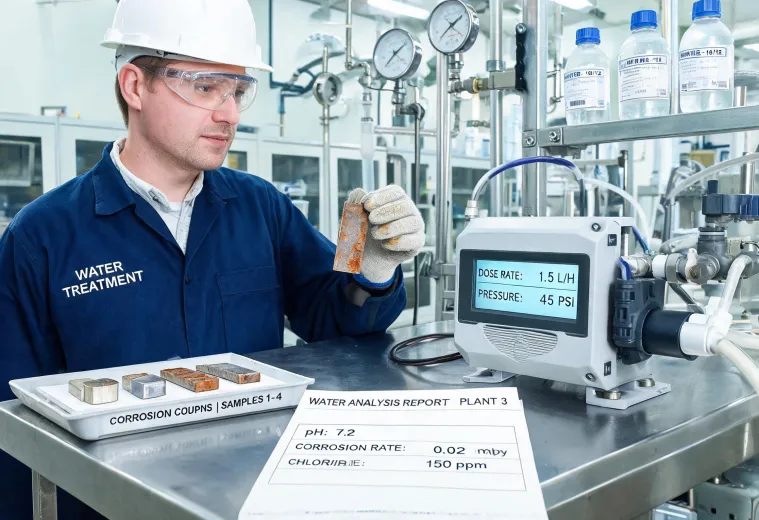
A cooling tower in a food plant and a cooling tower in a refinery can share similar chemistry, but the acceptable documentation, discharge boundary, and service window are different. Veolia starts with water analysis, metallurgy, and asset criticality, then maps the program to procurement and EHS needs. That helps teams avoid generic claims and focus on measurable outcomes such as corrosion coupon trend, cycles of concentration, membrane differential pressure, or oil-water separation clarity.
Every recommendation is framed with handling information from the SDS, and every sustainability claim must be tied to a defined measurement method. The result is a practical bridge between chemistry and the operating market using it.
Solutions finder
Veolia will route your request to a specialist who understands your operating market and document requirements.